
From Ancient Rituals to Modern Luxury Service
Barbering isn’t just a trade — it’s one of the oldest respected professions on Earth. Long before cameras, social media, or modern fades, barbers were leaders in hygiene, grooming, medicine, and culture.
When someone sits in a barber chair today, they’re participating in a tradition that spans thousands of years, across civilizations, religions, and empires. The tools have changed. The techniques have evolved. But the core purpose remains the same:
👉 Care for the community.
Let’s explore the surprising, powerful, and sometimes shocking history behind barbering — and how it shaped the industry we see today.
⸻
⏳ 5,000 YEARS AGO — Ancient Egypt
The first recorded barbers come from ancient Egypt around 3000 B.C.
Barbers were highly respected. Egyptians believed:
• Body hair held spiritual meaning
• Grooming connected to purity
• Cleanliness honored the gods
They used sharpened flint and oyster shells to shave heads and faces. Priests were required to remain completely shaved — a sign of purity.
This is the earliest version of barbering as:
• Ceremony
• Status
• Health
• Identity
Sound familiar?
⸻
🏛️ Ancient Rome & Greece — The Social Barbershop
In ancient Greece, barbershops — called koureion — became social centers.
Men gathered to discuss:
• Politics
• Sports
• Philosophy
• Community news
In Rome, clean grooming was seen as civilized. Young men’s first shave was a coming-of-age ceremony.
This is where the barbershop became:
✅ community hub
✅ debate space
✅ networking zone
Nothing has changed.
⸻
⚔️ The Middle Ages — Barbers Became Surgeons
Here’s where it gets wild.
By the Middle Ages, barbers weren’t just cutting hair.
They also served as:
• Dentists
• Bloodletters
• Minor surgeons
• Wound cleaners
• Leech applicators
• Bone setters
People trusted barber-surgeons more than physicians, because they were:
• Accessible
• Skilled with blades
• Experienced with the public
They performed:
🩸 bloodletting
🦷 tooth extractions
⚔️ battlefield triage
Your barber was your doctor.
⸻
🎏 The Barber Pole Explained
You’ve seen it outside of shops — the iconic red, white, and blue pole.
Here’s its meaning:
• Red = blood
• White = bandages
• Blue = veins (U.S. interpretation after colonial influence)
• The pole = the staff patients squeezed during bloodletting
• The ball at the top = the basin used to catch blood
So when you see a barber pole?
You’re looking at medical history.
⸻
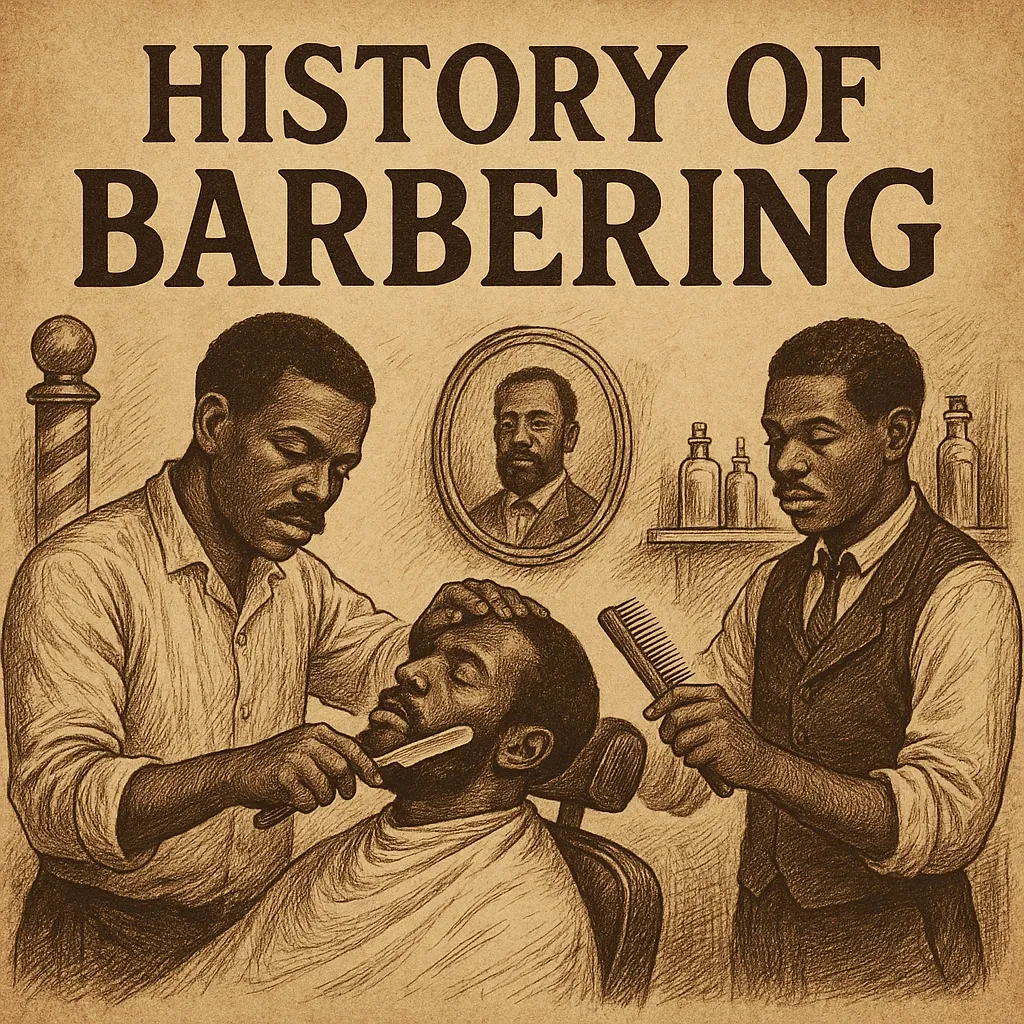
✊ 19th–20th Century — Barbers and Black Culture
In America, Black barbershops became cultural pillars.
They served as:
• Safe spaces
• Entrepreneurial hubs
• Political meeting grounds
• Fashion influencers
• Community therapy
Clients didn’t just get haircuts…
They got:
• Brotherhood
• Game
• Mentorship
• Advice
Black barbers influenced:
• Music culture
• Street fashion
• Professional presentation
• Self-expression
The shop became the culture.
⸻
💈 Modern Barbering — Craft Meets Culture
By the 1900s, barbering evolved again.
Shops began focusing purely on:
• Haircuts
• Beard trims
• Shaves
• Grooming experience
Technology upgraded tools:
• Clipper motors
• Adjustable guards
• Razor precision
• Hair fibers
• Enhancement tools
Barbering became art.
Somewhere between cosmetology and sculpture, barbers began:
• Fading
• Texturizing
• Detailing
• Linework
• Beard sculpting
The fade became a global icon.
⸻
📸 The Social Media Era
The internet changed the game.
Barbers now:
• Build brands online
• Attract clients through visuals
• Create viral content
• Master enhancements
• Study global techniques
Demand skyrocketed for:
✅ Picture-perfect hairlines
✅ Trend-driven fades
✅ Camera-ready precision
The chair became a stage.
⸻
🚐 Mobile Barbering — The New Frontier
We’re now in barbering’s newest evolution:
Luxury convenience.
Instead of waiting in crowded shops, clients choose:
• Privacy
• Time efficiency
• One-on-one service
• On-call grooming
Mobile barbers — like Head Peace Barber & Beauty Shop — are leading the next transformation:
• Busy professionals
• Parents
• Athletes
• Artists
• CEOs
Everyone values time now more than ever.
Mobile service = the future of premium grooming.
⸻
🧠 Why Barbering Will Never Die
As long as humans:
• Grow hair
• Care about appearance
• Seek connection
• Want confidence…
Barbers will exist.
Because barbering isn’t just grooming:
It’s:
• Therapy
• Culture
• Confidence
• Conversation
• Community
Robots can cut hair.
But they can’t replace presence.
⸻
👑 The Head Peace Philosophy
We honor the root of this craft:
• Ancient ritual
• Community culture
• Precision cutting
• Professional hygiene
• Personal transformation
Our service combines:
🔹 old-world respect
🔹 modern luxury
🔹 cultural relevance
🔹 mobile convenience
You’re not just getting a fade.
You’re participating in a 5,000-year tradition of grooming, connection, and identity.
⸻
🧵 Every Haircut Has History
When you sit in the seat, you’re part of a lineage that includes:
• Pharaohs
• Warriors
• Philosophers
• Kings
• Athletes
• Artists
• Celebrities
• Communities
The world notices how you show up.
Barbering helps you show up as your best self.
⸻
🎤 Final Word
Barbering began as:
• Ritual
• Medicine
• Ceremony
It evolved into:
• Fashion
• Culture
• Status
• Art
And today?
It’s experience.
At Head Peace Barber & Beauty Shop, we respect the history, master the craft, and elevate the future with luxury mobile service.
📅 Book now — become part of the evolution.
Barbering isn’t just history.
It’s legacy.
And we’re just getting started.
Leave a Reply